
Early in my career, during my enterprise software years at Microsoft and at a couple of business intelligence companies, every org chart had a glamour wing and a punishment wing.
The glamour wing built new features. They got the launch parties, the conference demos, and the promotions. The punishment wing was called sustaining engineering, or maintenance, or some other name chosen the way hospitals choose paint colors: to make you feel nothing at all.
They kept version 9.2 alive for the one enterprise customer who refused to upgrade. They lived in triage meetings, debating whether the bug corrupting one report for one customer was a P1 or a P2. Nobody grew up dreaming of the punishment wing. I certainly did not. When a reorg threatened to move you there, you updated your resume.
Here is the part nobody said out loud: the punishment wing was the business.
Features got the applause. Maintenance kept the revenue. Building the software was the visible part; keeping it useful while customers, platforms, integrations, and expectations changed was the long game.
The Lemon Law of Software
Software does not only rot from the inside. More often, it rots from the outside.
The code you shipped last year can be byte-for-byte identical today and still be worse now, because the world around it moved. The platform updated. An API changed shape. A permission tightened. A dependency deprecated something quietly in a changelog nobody read. A client's new hire configured the account their way.
That is not decay. It is drift. And drift never stops.
I see the sharpest version of it in the world Real Wave works in now. We live inside the GoHighLevel and CloseBot ecosystems, where agencies operate dozens of client subaccounts and every one is a small archaeological dig: half-deployed snapshots, inherited automations, tags that meant something to somebody in 2023, workflows connected to webhooks nobody remembers creating.
Each account is a machine that must keep running while the platform underneath it keeps shipping.
Then one morning an SMS does not send. A lead enters the wrong branch. A form submits but the follow-up never starts. Somebody asks the simple question that can consume half a day:
"Why didn't that happen?"
A real answer means tracing the trigger, checking tags, walking branches, reading execution history, testing the webhook, and touching account state carefully enough not to break three other things. It is a scavenger hunt where the prize is being asked again next week.
The Best Question Anyone Asked Me in Months
Not long ago, I demoed our AI copilot to the development lead of a partner company. He had been around GoHighLevel long enough to have scars, which is my favorite kind of audience.
The copilot audited a live account, explained the workflow structure, built a new workflow, connected a form, ran a live test, read the execution traces back, and generated a client-ready report.
The fun reactions came. "This is massive." "This changes the job." I enjoy those moments. I am human.
But the moment I actually loved came after the excitement. He leaned in and asked the veteran's question:
I could have hugged him.
That is not a skeptic's question. It is a builder's question. It separates people who have shipped software from people who have watched demonstrations of software. He was not asking whether the magic trick was impressive. He was asking who cleans up when the stage moves.
My answer is the thesis of this post:
The platform changing underneath us is not the risk we forgot to model. It is the work the system is designed to notice, understand, and help repair.
A world where nothing drifted, broke, or changed would be a world that needed very little maintenance software. Breakage is not welcome, but it is not surprising either. It is an input.
The Loop: Squeezing at Machine Speed
Strip maintenance down and you find a loop with four stations. For decades, humans were the conveyor belt carrying the work between them.
Monitor
Watch executions, exceptions, configuration changes, and account health continuously. Agents do not get bored at 3 a.m., and attention that never fatigues is an underrated operational advantage.
Debug
Trace the trigger, walk the branches, compare state, and read the execution history. The machine gathers the whole case file before asking a human to make a judgment.
Recommend
Move beyond "it broke." Explain why it broke, identify the smallest safe change, show the proposed diff, and define the test that would prove the repair.
Patch and verify
Apply the approved change, then read the live state back and run the check again. Trust does not come from the write. It comes from proof that the write took.
The fourth station is where people tend to get the design wrong in both directions. Full autopilot on production client accounts can turn one mistake into forty. But keeping humans in the loop as clerical labor wastes the entire opportunity.
The useful design is old wisdom in new clothes: AI proposes. Humans approve. Robots do the paperwork.
The human contributes the judgment. The machine contributes the vigilance, investigation, execution, and read-back. Run those stations at machine speed and the loop that used to consume a week of someone's frustration becomes a few deliberate approvals.
Why the Lemonade Stand Is the Moat
Now the strategic part, because "AI can fix bugs" is not the claim.
In the AI era, features are getting cheaper. Whatever impressive capability one company ships this quarter, competitors can often reproduce next quarter. Code generation compressed the cost of building, and the distance between a clever demo and a copied demo keeps shrinking.
If your moat is only "we built something impressive," you have a moat made of weather.
The maintenance loop is different:
- It is plumbed, not merely prompted. It lives against authorized, live account state with real operational consequences.
- It compounds. Every incident handled adds another pattern, check, edge case, and repair path to the operating knowledge.
- Trust grows one approval at a time. Customers first let the system look, then recommend, then patch bounded changes. That progression is earned.
- It sits inside the workflow. The valuable system is not a one-time launch. It is the quiet loop that keeps the launch useful six months later.
This is why constant platform change does not make me less confident in the category. It makes the category make sense.
We are not claiming the underlying infrastructure will stop moving. Quite the opposite. We are building around the fact that it will move, with monitoring, inspection, bounded action, human approval, and verification as first-class parts of the product.
The Punishment Wing Gets the Last Laugh
There is a version of this story about tools and a version about people. The people version matters more to me.
The engineers in the punishment wing were never doing low-value work. They were doing the highest-value work with the lowest-status tooling.
What made maintenance miserable was not the mission. It was the ratio: ninety-five percent scavenger hunt, five percent interesting judgment.
AI flips that ratio. When the scavenger hunt runs itself, what remains is the part worth waking up for: judgment, taste, risk, priority, and the call on what should happen next.
The maintenance engineer of the AI era is not a ticket-queue janitor. They are the editor-in-chief of a system that can increasingly observe and repair itself. Same mission. Opposite job.
Within a few years, "we automated our maintenance loop" will become the bragging right that "we have an app" was in 2010 and "we have AI" was in 2023. The companies that get there first will look slow and boring until they suddenly look very hard to catch.
The Recipe
You do not need our product to start thinking this way.
The next time something breaks in your stack, fix it. Then ask the question that changes the job:
What would it have taken for this fix to propose itself?
- What signal would the monitor have needed to notice the problem?
- What execution trace or account state would the debugger have read?
- What evidence would make the recommended fix credible?
- What approval boundary would keep the action controlled?
- What read-back or test would prove the repair worked?
Answer those questions and you have written the first version of the loop. Stop treating breakage only as an interruption to the real work. Start treating it as an input to a system that learns how to keep the work alive.
That is the system we are building at Real Wave. CoPilot watches GoHighLevel accounts, helps trace what broke and why, proposes the repair, applies approved changes, and reads the result back to confirm the state.
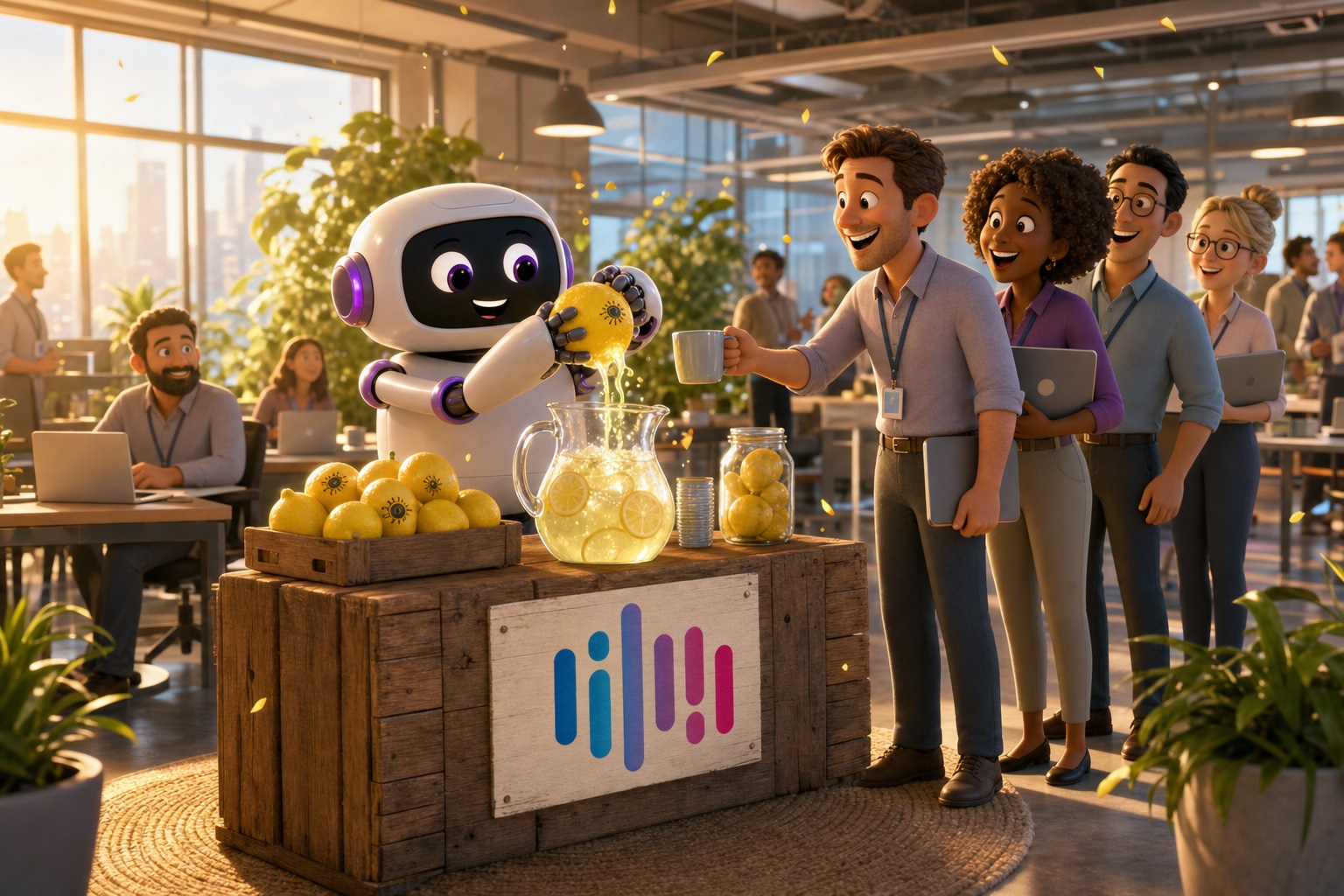
The platform will keep shipping lemons.
We will be at the stand.
Maintenance is becoming the product
The new world is not software that never changes. It is software operations that can watch change, explain it, propose a response, and verify the result without turning every incident into a human scavenger hunt.
Back to Real Wave Blog